
Chemical Strategies and Solutions for Bacteria and Cancer cell Resistance

Publications

2024

VAN KLAVEREN, S. et al. Galectin-8N-selective 4-halophenylphthalazinone-galactals double π stack in a unique pocket. ACS Medicinal Chemistry Letters. 2024, 15, 1319-1324, DOI: 10.1021/acsmedchemlett.4c00212.

DOBRIČIĆ, V. et al. High-performance liquid chromatography evaluation of lipophilicity and QSRR modeling of a series of dual DNA gyrase and topoisomerase IV inhibitors. Acta Chromatographica. 2024, 36, 45-51, DOI: 10.1556/1326.2022.01096.

POJE, G. et al. Unveiling the antiglioblastoma potential of harmicens, harmine and ferrocene hybrids : current recommendations and future perspectives. Acta Pharmaceutica. 2024, 74, DOI: 10.2478/acph-2024-0033.

ZORMAN, M. et al. Enhancing antibacterial efficacy : combining novel bacterial topoisomerase inhibitors with efflux pump inhibitors and other agents against gram-negative bacteria. Antibiotics. 2024, 13, 1081, DOI: 10.3390/antibiotics13111081.

SLUGA, J. et al. Targeting N-acetylglucosaminidase in Staphylococcus aureus with iminosugar inhibitors. Antibiotics. 2024, 13, 751, 1-12, DOI: 10.3390/antibiotics13080751.

DERNOVŠEK, J. et al. Exploration and optimisation of structure-activity relationships of new triazole-based C-terminal Hsp90 inhibitors towards in vivo anticancer potency. Biomedicine & Pharmacotherapy. 2024, 177, 16941, DOI: 10.1016/j.biopha.2024.116941.

ZIDAR, N. et al. Exploring the interaction of N-(benzothiazol-2-yl)pyrrolamide DNA gyrase inhibitors with the GyrB ATP-binding site lipophilic floor : a medicinal chemistry and QTAIM study. Bioorganic & Medicinal Chemistry. 2024, 109, 117798 DOI: 10.1016/j.bmc.2024.117798.

DERNOVŠEK, J. et al. First dual inhibitors of human topoisomerase IIα and Hsp90 C-terminal domain inhibit the growth of Ewing sarcoma in vitro and in vivo. Bioorganic Chemistry. 2024, 153, 107850, DOI: 10.1016/j.bioorg.2024.107850.

BALSOLLIER, C. et al. Discovery of two non-UDP-mimic inhibitors of O-GlcNAc transferase by screening a DNA-encoded library. Bioorganic Chemistry. 2024, 147, 1-10, DOI: 10.1016/j.bioorg.2024.107321.

DERNOVŠEK, J. et al. Hiding in plain sight : optimizing topoisomerase IIα inhibitors into Hsp90β selective binders. European Journal of Medicinal Chemistry. 2024, 280, 116934, DOI: 10.1016/j.ejmech.2024.116934.

PYLKKÖ, T. et al. Virtual screening assisted search for inhibitors of the translocated intimin receptor of enteropathogenic Escherichia coliChemBioChem. 2024, 25, art. e202300638, DOI: 10.1002/cbic.202300638.

STERLE, M. et al. Development of narrow-spectrum topoisomerase-targeting antibacterials against mycobacteria. European Journal of Medicinal Chemistry. 2024, 276, 116693, DOI: 10.1016/j.ejmech.2024.116693.

ZIDAR, N. et al. Improved N-phenylpyrrolamide inhibitors of DNA gyrase as antibacterial agents for high-priority bacterial strains. European Journal of Medicinal Chemistry. 2024, 278, 116823, DOI: 10.1016/j.ejmech.2024.116823.

PETHŐ, Zoltán. et al. A synthetic flavonoid derivate in the plasma membrane transforms the voltage-clamp fluorometry signal of CiHv1. FEBS Journal. 2024, 291, 2354-2371, DOI: 10.1111/febs.17105.

PIGA, M. et al. Identification of a novel structural class of Hv1 inhibitors by structure-based virtual screening. Journal of Chemical Information and Modeling. 2024, 64, 4850-4862, DOI: 10.1021/acs.jcim.4c00240.

DOBRIČIĆ, V. et al. Estimation of passive gastrointestinal absorption of new dual DNA gyrase and topoisomerase IV inhibitors using PAMPA and biopartitioning micellar chromatography and quantitative structure-retention relationship analysis. Journal of Chromatography. B, Analytical Technologies in the Biomedical and Life Sciences. 2024, 1240, 124158, DOI: 10.1016/j.jchromb.2024.124158.

ZAJEC, Ž. et al. New class of Hsp90 C-terminal domain inhibitors with anti-tumor properties against triple-negative breast cancer. Journal of Medicinal Chemistry. 2024, 67, 12984-13018, DOI: 10.1021/acs.jmedchem.4c00932.

COTMAN, A. et al. New N-phenylpyrrolamide inhibitors of DNA gyrase with improved antibacterial activity. RSC Advances. 2024, 14, 28423-28454, DOI: 10.1039/d4ra04802d.

GUTIERREZ, L. et al. New ATP-competitive inhibitors of E. coli GyrB obtained from the mapping of hydrophobic floor at the binding site. Synthesis and biological evaluation. RSC Medicinal Chemistry. 2024, 15, 3759-3777, DOI: 10.1039/D4MD00498A.

DURCIK, M. et al. Benzothiazole DNA gyrase inhibitors and their conjugates with siderophore mimics: design, synthesis and evaluation. RSC Advances. 2024, 14, 2905-2917, DOI: 10.1039/d3ra08337c.

DERNOVŠEK, J. et al. Discovery of new Hsp90–Cdc37 protein–protein interaction inhibitors : in silico screening and optimization of anticancer activity. RSC Advances. 2024, 14, 28347–28375, DOI: 10.1039/D4RA05878J.

HAŠANOVÁ, S. et al. Catalytic performance of Noyori–Ikariya-type ruthenium complex with tethered syn-ULTAM ligand for the asymmetric transfer hydrogenation of ketones. Tetrahedron Letters. 2024, 134, 1-4, DOI: 10.1016/j.tetlet.2024.154984.

2023

STERLE, M. et al. Hydrogen-bonding ability of Noyori–Ikariya catalysts enables stereoselective access to 1−CF3-substituted syn-1,2-diols via dynamic kinetic resolution. ACS catalysis. 2023, 13, 6242–6248, DOI: 10.1021/acscatal.3c00980.

MOTALN, K. et al. (S)-2-[(S)-2,2,2-trifluoro-1-hydroxyethyl]-1- tetralone. IUCrData. 2023, 8, x221209, DOI: 10.1107/S2414314622012093.

RADAN, K. et al. (1S,2S)-2-[(S)-2,2,2-trifluoro-1-hydroxyethyl]-1-tetralol. IUCrData. 2023, 8, x230217, DOI: 10.1107/S2414314623002171.

STERLE, M et al. Exploring the 5-substituted 2-aminobenzothiazole-based DNA gyrase B inhibitors active against ESKAPE pathogens. ACS Omega 2023, 8, 24387–24395, DOI: 10.1021/acsomega.3c01930.

ZAJEC, Ž et al. Optimisation of pyrazolo[1,5-a]pyrimidin-7(4H)-one derivatives as novel Hsp90 C-terminal domain inhibitors against Ewing sarcoma. Bioorganic chemistry. 2023, 131, 1-16, https://www.sciencedirect.com/science/article/pii/S0045206822007179, DOI: 10.1016/j.bioorg.2022.106311.

SKOK, Ž et al. ATP-competitive inhibitors of human DNA topoisomerase IIα with improved antiproliferative activity based on N-phenylpyrrolamide scaffold. European journal of medicinal chemistry. 2023, 249, 1-21.  https://www.sciencedirect.com/science/article/pii/S0223523423000314?via%3Dihub, DOI: 10.1016/j.ejmech.2023.115116.

GUBIČ, Š et al. Immunosuppressive effects of new thiophene-based KV1.3 inhibitors. European journal of Medicinal Chemistry 2023, art. 115561, https://www.sciencedirect.com/science/article/pii/S0223523423005275, DOI: 10.1016/j.ejmech.2023.115561.

ZIDAR, N et al. New aryl and acylsulfonamides as state-dependent inhibitors of Nav1.3 voltage-gated sodium channel. European Journal of Medicinal Chemistry 2023, 258, art. 115530, https://www.sciencedirect.com/science/article/pii/S0223523423004968, DOI: 10.1016/j.ejmech.2023.115530.

STURTZEL, C et al. Refined high-content imaging-based phenotypic drug screening in zebrafish xenografts. NPJ Precision Oncology. 2023, 7, art. 44, https://www.nature.com/articles/s41698-023-00386-9, https://repozitorij.uni-lj.si/IzpisGradiva.php?id=146346, DOI: 10.1038/s41698-023-00386-9.

DERNOVŠEK, J et al. Following the design path of isoform-selective Hsp90 inhibitors : small differences, great opportunities. Pharmacology & therapeutics. 2023, art. 108396https://www.sciencedirect.com/science/article/pii/S0163725823000608, DOI: 10.1016/j.pharmthera.2023.108396.

DEPUYDT, A et al. Structure-function studies of sponge-derived compounds on the cardiac CaV3.1 channel. International journal of molecular sciences. 2023, 24, 3429. https://www.mdpi.com/1422-0067/24/4/3429, DOI: 10.3390/ijms24043429.

COTMAN, AE et al. Discovery and Hit-to-Lead Optimization of Benzothiazole scaffold-based DNA gyrase inhibitors with potent activity against Acinetobacter baumannii and Pseudomonas aeruginosa. Journal of medicinal chemistry. 2023, 66, 1380-1425. https://pubs.acs.org/doi/full/10.1021/acs.jmedchem.2c01597, DOI: 10.1021/acs.jmedchem.2c01597.

DURCIK, M et al.  New dual inhibitors of bacterial topoisomerases with broad-spectrum antibacterial activity and In vivo efficacy against vancomycin – intermediate Staphylococcus aureus. Journal of medicinal chemistry. 2023, 66, 3968-3994. https://pubs.acs.org/doi/10.1021/acs.jmedchem.2c01905, DOI: 10.1021/acs.jmedchem.2c01905.

GUTIERREZ, LJ et al. Computer-aided structure-based optimization of 4,5,6,7-tetrahydrobenzo[d]thiazole-2,6-diamine derivatives as DNA gyrase B inhibitors. New journal of chemistry. 2023, in press. https://pubs.rsc.org/en/content/articlelanding/2023/nj/d2nj05103f, DOI: 10.1039/d2nj05103f.

CHEN, Ting et al. Dynamic kinetic resolution of β-substituted α-diketones via asymmetric transfer hydrogenation. Journal of the American Chemical Society. 2023, 145, 585–599, DOI: 10.1021/jacs.2c11149.

2022

COTMAN, AE et al. Catalytic stereoconvergent synthesis of homochiral β−CF3, β−SCF3, and β−OCF3 benzylic alcohols. ACS Organic & Inorganic Au. 2022, 2, 396-404, https://pubs.acs.org/doi/10.1021/acsorginorgau.2c00019, DOI: 10.1021/acsorginorgau.2c00019.

TOPLAK, Ž et al. Overcoming challenges of HERG potassium channel liability through rational design : Eag1 inhibitors for cancer treatment. Medicinal research reviews. 2022, 42, 283.226. https://onlinelibrary.wiley.com/doi/10.1002/med.21808, DOI: 10.1002/med.21808.

DOBRIČIĆ, V et al. High-performance liquid chromatography evaluation of lipophilicity and QSRR modeling of a series of dual DNA gyrase and topoisomerase IV inhibitors. Acta Chromatographica. 2022. https://akjournals.com/view/journals/1326/aop/article-10.1556-1326.2022.01096/article-10.1556-1326.2022.01096.xml?rskey=IpwwzM&result=2, DOI: 10.1556/1326.2022.01096.

GUBIČ, Š. et al. Design of new potent and selective thiophene-based Kv1.3 inhibitors and their potential for anticancer activity. Cancers. 2022, 14, 1-20. https://www.mdpi.com/2072-6694/14/11/2595, DOI: 10.3390/cancers14112595.

GUBIČ, Š. et al. New diarylamine KV10.1 inhibitors and their anticancer potential. Pharmaceutics 2022, 14, 1963. https://www.mdpi.com/1999-4923/14/9/1963, DOI: 10.3390/pharmaceutics14091963.

ZAJEC, Ž et al. In silico discovery and optimisation of a novel structural class of Hsp90 C-terminal domain inhibitors. Biomolecules 2022, 12, art 884. https://www.mdpi.com/2218-273X/12/7/884, DOI: 10.3390/biom12070884.

DURCIK, M et al. New bisphenol A and bisphenol S analogs : evaluation of their hERα agonistic and antagonistic activities using the OECD 455 in-vitro assay and molecular modeling. Chemico-biological interactions 2022, 354, 1-11, https://www.sciencedirect.com/science/article/pii/S0009279722000254, DOI: 10.1016/j.cbi.2022.109820.

VAN KLAVEREN, S et al. Design and synthesis of novel 3-triazolyl-1-thiogalactosides as galectin-1, -3 and -8 inhibitors. RSC advances 2022, 12, 18973-18984, https://pubs.rsc.org/en/content/articlelanding/2022/RA/D2RA03163A, DOI: 10.1039/D2RA03163A.

GIRARDI, B et al. Selective monovalent galectin-8 ligands based on 3-lactoylgalactoside. ChemMedChem 2022, 17, 1-7. https://chemistry-europe.onlinelibrary.wiley.com/doi/10.1002/cmdc.202100514, DOI: 10.1002/cmdc.202100514.

2021

GUBIČ, Š et al. Discovery of K V 1.3 ion channel inhibitors: medicinal chemistry approaches and challenges. Medicinal research reviews. 2021, 41, 2423-2473. https://onlinelibrary.wiley.com/doi/10.1002/med.21800?fbclid=IwAR1_DHtmR-noxar9IpT79drKbH91UeWJFXQMC32EeX_GlotbKhrZvp2MjJI, DOI: 10.1002/med.21800.

COTMAN, AE et al. Practical synthesis and application of halogen-doped pyrrole building blocks. ACS omega. 2021, 6, 9723-9730. https://pubs.acs.org/doi/10.1021/acsomega.1c00331, https://pubs.acs.org/doi/pdf/10.1021/acsomega.1c00331, DOI: 10.1021/acsomega.1c00331.

TOPLAK, Ž et al. 3D pharmacophore-based discovery of novel Kv10.1 inhibitors with antiproliferative activity. Cancers. 2021, 13, 1-24. https://www.mdpi.com/2072-6694/13/6/1244.

DURCIK, M et al. New dual ATP-competitive inhibitors of bacterial DNA gyrase and topoisomerase IV active against ESKAPE pathogens. European journal of medicinal chemistry. 2021, 213, 1-22. https://www.sciencedirect.com/science/article/pii/S0223523421000490#!, DOI: 10.1016/j.ejmech.2021.113200.

TOPLAK, Ž et al. Molecular dynamics-derived pharmacophore model explaining the nonselective aspect of KV10.1 pore blockers. International journal of molecular sciences. 2021, 22, 1-24. https://www.mdpi.com/1422-0067/22/16/8999.

TOMAŠIČ, T et al.  Selective DNA gyrase inhibitors : multi-target in silico profiling with 3D-pharmacophores. Pharmaceuticals 2021, 14, 1-24, https://www.mdpi.com/1424-8247/14/8/789, DOI: 10.3390/ph14080789

DURCIK, M et al. Hybrid inhibitors of DNA gyrase A and B : design, synthesis and evaluation. Pharmaceutics. 2021, 13, iss. 1-17. https://www.mdpi.com/1999-4923/13/1/6, DOI: 10.3390/pharmaceutics13010006.

DERNOVŠEK, J et al. Pharmaceutics. 2021,13, 1-31. https://www.mdpi.com/1999-4923/13/8/1283, DOI: 10.3390/pharmaceutics13081283.

HASSAN, M et al. Structure-guided design of D-galactal derivatives with high affinity and selectivity for the galectin-8 N-terminal domain. ACS Medicinal Chemistry Letters. 2021, 12,1745-1752, https://pubs.acs.org/doi/full/10.1021/acsmedchemlett.1c00371, DOI: 10.1021/acsmedchemlett.1c0037.

NOVAK, D et al. Radiolabelled CCK2R antagonists containing PEG linkers : design, synthesis and evaluation. ChemMedChem 2021, 16, 155-163. https://chemistry-europe.onlinelibrary.wiley.com/doi/full/10.1002/cmdc.202000392, DOI: 10.1002/cmdc.202000392.

TOMAŠIČ, T et al. Does targeting Arg98 of FimH lead to high affinity antagonists? European Journal of Medicinal Chemistry 2021, 211, 1-16. https://www.sciencedirect.com/science/article/pii/S0223523420310655?via%3Dihub#!, DOI: 10.1016/j.ejmech.2020.113093.

HASSAN, M et al. Benzimidazole-galactosides bind selectively to the galectin-8 N-terminal domain : structure-based design and optimisation. European Journal of Medicinal Chemistry 2021, 223, 1-13,  https://www.sciencedirect.com/science/article/pii/S0223523421005134?via%3Dihub, DOI: 10.1016/j.ejmech.2021.113664.

WEISS, M et al. New quinolinone O-GlcNAc transferase inhibitors based on fragment growth. Frontiers in Chemistry 2021, 9, 1-8. https://www.frontiersin.org/articles/10.3389/fchem.2021.666122/full, DOI: 10.3389/fchem.2021.666122.

COTMAN, AE. Escaping from Flatland : stereoconvergent synthesis of 3-dimensional scaffolds via ruthenium(II)-catalyzed Noyori-Ikariya transfer hydrogenation. Chemistry – A European Journal 2021, 27, str. 39–53, DOI: 10.1002/chem.202002779.

2020

VIRANT, M et al. Pyridine wingtip in [Pd(Py−tzNHC)2]2+ complex is a proton shuttle in the catalytic hydroamination of alkynes. Organic letters. 2020, 22, 2157–2161, DOI: 10.1021/acs.orglett.0c00203.

Zhao, Z et al. Correction to Stereodivergent Access to Enantioenriched Epoxy Alcohols with Three Stereogenic Centers via Ruthenium-Catalyzed Transfer Hydrogenation. Org. Lett. 2020, 22, 4580. DOI: doi.org/10.1021/acs.orglett.0c01610.

ZIDAR, N et al. Synthesis, antiproliferative effect and topoisomerase II inhibitory activity of 3-methyl-2-phenyl-1H-indoles. ACS Medicinal Chemistry Letters. 2020 11, 691-697. https://pubs.acs.org/doi/10.1021/acsmedchemlett.9b00557, https://pubs.acs.org/doi/pdf/10.1021/acsmedchemlett.9b00557, DOI: 10.1021/acsmedchemlett.9b00557.

SKOK, Ž et al. Exploring the chemical space of benzothiazole-based DNA gyrase B inhibitors. ACS Medicinal Chemistry Letters. 2020, 11, 2433-2440. https://pubs.acs.org/doi/abs/10.1021/acsmedchemlett.0c00416#, https://pubs.acs.org/doi/pdf/10.1021/acsmedchemlett.0c00416, DOI: 10.1021/acsmedchemlett.0c00416.

DURCIK, M et al. Efficient synthesis of hydroxy-substituted 2-aminobenzo[d]thiazole-6-carboxylic acid derivatives as new building blocks in drug discovery. ACS omega. 2020, 5, 8305-8311. https://pubs.acs.org/doi/10.1021/acsomega.0c00768, https://pubs.acs.org/doi/pdf/10.1021/acsomega.0c00768, DOI: 10.1021/acsomega.0c00768.

LAMUT, A et al. Design, synthesis and biological evaluation of novel DNA gyrase inhibitorsand their siderophore mimic conjugates. Bioorganic chemistry. 2020, 95, 1-13. https://www.sciencedirect.com/science/article/pii/S0045206819316591?dgcid=author, DOI: 10.1016/j.bioorg.2019.103550.

LAMUT, A et al. Anti-influenza virus activity of benzo[d]thiazoles that target heat shock protein 90. Bioorganic chemistry 2020, 98, https://www.sciencedirect.com/science/article/pii/S0045206819317456?via%3Dihub, DOI: 10.1016/j.bioorg.2020.103733.

HENDRICKX, LA et al. Design and characterization of a novel structural class of Kv1.3 inhibitors. Bioorganic chemistry. 2020, 98, 1-9. https://www.sciencedirect.com/science/article/pii/S0045206819321418, DOI: 10.1016/j.bioorg.2020.103746.

SKOK, Ž et al. Discovery of new ATP-competitive inhibitors of human DNA topoisomerase IIalpha through screening of bacterial topoisomerase inhibitors. Bioorganic chemistry. 2020, 102, 1-17. https://www.sciencedirect.com/science/article/pii/S0045206820313468, DOI: 10.1016/j.bioorg.2020.104049.

GATTA, V et al. A new cell-based AI-2-mediated quorum sensing interference assay in screening of LsrK-targeted inhibitors. ChemBioChem. 2020, 21, 1918-1922. https://onlinelibrary.wiley.com/doi/abs/10.1002/cbic.201900773, DOI: 10.1002/cbic.201900773.

FOIS, B et al. ChemMedChem. 2020, 15, 265-269. https://onlinelibrary.wiley.com/doi/abs/10.1002/cmdc.201900607, DOI: 10.1002/cmdc.201900607.

NYERGES, Á et al. Rational design of balanced dual-targeting antibiotics with limited resistance. PLoS biology. 2020, 18, 1-31. https://journals.plos.org/plosbiology/article?id=10.1371/journal.pbio.3000819, DOI: 10.1371/journal.pbio.3000819.

LAMUT, A et al. Second-generation 4,5,6,7-tetrahydrobenzo[d]thiazoles as novel DNA gyrase inhibitors. Future Med Chem. 2020, 12, 277-297.
https://www.future-science.com/doi/10.4155/fmc-2019-0127, DOI: 10.4155/fmc-2019-0127

DALLAVALLE, S et al. Improvement of conventional anti-cancer drugs as new tools against multidrug resistant tumors. Drug Resist Update. 2020, 50, 100682. https://www.sciencedirect.com/science/article/pii/S1368764620300091?via%3Dihub, DOI: 10.1016/j.drup.2020.100682

TOMAŠIČ, T et al. Discovery of novel Hsp90 C-terminal inhibitors using 3D-pharmacophores derived from molecular dynamics simulations. International Journal of Molecular Sciences 2020, 21, 1-22, https://www.mdpi.com/1422-0067/21/18/6898, DOI: 10.3390/ijms21186898

SKOK, Ž et al. Dual Inhibitors of Human DNA Topoisomerase II and Other Cancer-Related Targets. J Med Chem. 2020, 63, 884-904.
https://pubs.acs.org/doi/10.1021/acs.jmedchem.9b00726, DOI: 10.1021/acs.jmedchem.9b00726

Pls

Lucija Peterlin Mašič
Prof. Dr. PI

The key moment, which set the path of my research vision, came after my PhD in 2004. I realised at that point that academic medicinal chemistry is focused mostly on the optimisation of potency of new compounds and not on integrated optimisation of potency, physicochemical properties and safety. After my PhD, in addition to medicinal chemistry I proceed with interdisciplinary training and research in toxicology. It was essential for me to leave the academic environment and perform the postdoctoral training in large pharmaceutical company (AstraZeneca, Safety Assessment Department, Sweden). The industrial experience and interdisciplinary in medicinal chemistry and toxicology gave me essential competitive advantage for the applied part of my research work in the field of antibacterial and anticancer hit and hit-to-lead drug discovery.

CURRENT POSITION
2017- Full Professor of Medicinal Chemistry, University of Ljubljana
2021- in parallel associate professor of Toxicological Chemistry, University of Ljubljana

MAIN RESEARCH INTERESTS
(interdisciplinary expertise in medicinal chemistry and toxicology):
– Medicinal chemistry: new antibacterial compounds with limited resistance,  dual inhibitors of DNA gyrase B and topoisomerase IV, design of new modulators of voltage-gated potassium ion channels (KV1.3, KV10.1, SK channels) and their role in cancer and immune diseases; specific targeting of mitochondrial ion channels in cancer;
– Toxicology: toxicology in the early drug discovery, in vitro drug metabolism; endocrine disrupting chemicals; mechanistic toxicology.

Janez Ilaš
Prof. Dr. PI

Janez Ilaš is a professor of medicinal chemistry at the Faculty of Pharmacy, University of Ljubljana. He completed his undergraduate studies at the same institution in 2003 and earned his PhD in 2008. His work primarily centers on medicinal chemistry, particularly in the design, synthesis, and evaluation of antitumor and antibacterial agents. His research includes the study of topoisomerase II and HDAC inhibitors for cancer treatment and gyrase and topoisomerase IV inhibitors for antibacterial therapies. Professor Ilaš has held various positions at the Faculty of Pharmacy, beginning as an assistant professor in 2009 and becoming a full professor in 2020. He has participated in national and international research projects, including those funded by the ARRS and the European Union, such as H2020 and IMI ENABLE, contributing to the development of bioactive compounds. He is also a leader of several projects with pharmaceutical industry (Krka, Slovenia; Novartis, Switzerland). His teaching responsibilities include undergraduate and postgraduate courses in medicinal chemistry, drug analysis and biophysical methods.

CURRENT POSITION
2020 – Full Professor of Medicinal Chemistry, University of Ljubljana

MAIN RESEARCH INTERESTS
Design, synthesis, and evaluation of bioactive compounds, with a focus on topoisomerase II and HDAC inhibitors for anticancer therapies, as well as bacterial gyrase and topoisomerase IV inhibitors for antibacterial agents. His research also involves biophysical methods for evaluating enzyme inhibitory activities, including the use of isothermal titration calorimetry and biolayer interferometry to study intermolecular interactions. Additionally, he uses HPLC-MS for evaluating the inhibitory activities of compounds. In the area of pharmaceutical chemistry, he applies analytical methods such as mass spectrometry (MS) and high-resolution mass spectrometry (HRMS) to assess synthesized compounds and their potential as bioactive agents.

Tihomir Tomašič
Prof. Dr. PI

Tomašič is an expert in computer-aided drug design and synthesis of bioactive compounds, particularly with anticancer and antibacterial activities. His research focus at present is on the development of Hsp90 and voltage-gated ion channel inhibitors with anticancer activities, and DNA gyrase inhibitors as antibacterial agents. His expertise in molecular modelling covers library design, library preparation, molecular docking, molecular dynamics simulations, homology modelling, virtual screening, pharmacophore modelling and physicochemical and ADMET property prediction and optimisation. He has also expertise in organic synthesis and analysis and characterisation of small molecules. He acts as an Editor in Pharmaceutics and Frontiers in Chemistry. He participated in several national and international research projects acting as project leader or collaborator.

CURRENT POSITION
2023- Full Professor of Medicinal Chemistry, University of Ljubljana

MAIN RESEARCH INTERESTS
– new antibacterial compounds with limited resistance acting as dual inhibitors of DNA gyrase B and topoisomerase IV
– development of new Hsp90 inhibitors acting by novel mechanisms of action as anticancer drugs
– design of new modulators of voltage-gated potassium channels (KV1.3, KV10.1, SK channels) and their role in cancer
– specific targeting of mitochondrial ion channels in cancer

Nace Zidar
Assoc. Prof. Dr. PI

Nace Zidar is an associate professor of medicinal chemistry at the Faculty of Pharmacy, University of Ljubljana. He graduated from Pharmacy in 2006 and received his PhD in 2011. In 2017, he completed postdoctoral training at the University of Milan (Italy). He led two research projects funded by the Slovenian Research Agency, was a member of the management committee of several European COST projects, led a bilateral project between Slovenia and the USA, and collaborated in several EU-funded drug discovery projects. He has extensive experience in medicinal chemistry. He is co-author of more than 60 SCI original scientific papers and 2 patent applications. He was awarded the UL Faculty of Pharmacy Award in 2006, the UL Faculty of Pharmacy Dean’s Award in 2010, and the Krka Award in 2011. He is a university lecturer of undergraduate courses in medicinal chemistry, biomedical analysis and drug analysis and has extensive experience in mentoring undergraduate and graduate students.

CURRENT POSITION
2017- Associate Professor of Medicinal Chemistry, University of Ljubljana

MAIN RESEARCH INTERESTS
Design, synthesis, and evaluation of new bioactive compounds, particularly those with effects on voltage-gated ion channels (Nav1.3, Nav1.7, Hv1), bacterial and human topoisomerases (DNA gyrase, topoisomerase IV, human DNA topoisomerase II), and with anticancer activity.

Andrej Emanuel Cotman
Assist. Prof. Dr. PI

Andrej carried out his undergraduate research with Prof. D. Kikelj at the Faculty of Pharmacy, Ljubljana, in the field of antibacterials. He obtained his PhD in organic chemistry with B. Mohar at the National institute of Chemistry, Ljubljana, involving asymmetric reduction of ketones catalyzed by chiral organometallic complexes. He then joined the Košmrlj group at the Faculty of Chemistry and Chemical Technology, Ljubljana, and explored the field of palladium-catalyzed C–N coupling reactions. In 2019 Andrej returned to the Faculty of Pharmacy as a postdoctoral researcher on an Innovative Medicines Initiative funded antibacterial project ENABLE, and was appointed to the title assistant professor of medicinal chemistry in 2021. He led a basic research project funded by ARIS, a French-Slovenian bilateral project Proteus, and two teaching projects funded by the Development fund of the University of Ljubljana. His research was published in the leading journals in the fields of organic and medicinal chemistry, such as Angewandte Chemie, Journal of the American Chemical Society, Journal of Medicinal Chemistry, ACS Catalysis and Organic Letters.

CURRENT POSITION
2021- Assistant Professor of Medicinal Chemistry, University of Ljubljana

MAIN RESEARCH INTERESTS
Asymmetric synthesis, Organometallic chemistry, Escaping from flatland

PostDocs

Daniela Secci
PhD
Mateja Toma
PhD

PhD students

Boštjan Adamlje
researcher
Ana Jug
researcher

ALUMNI:

Martina Durcik, PhD
Žan Toplak, PhD
Špela Gubič, PhD

Jernej Cingl
researcher
Peter Peršolja
researcher
Jaka Dernovšek
researcher
Martina Piga
researcher
Ivan Džajić
researcher
Maša Sterle
researcher
Marzia Fois
researcher
Živa Zajec
researcher

ARIS J7-4635: MitoCan – Preclinical development of new Mitochondrial ion channel inhibitors for Cancer therapy; 2022-2025; (1.5 million)

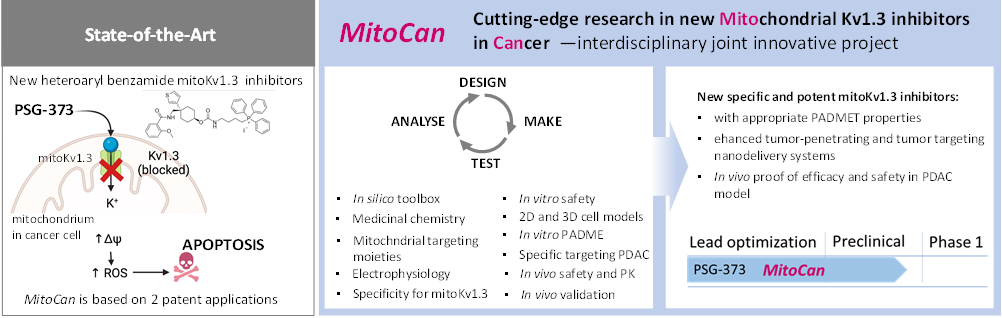
Ion channels are now considered unconventional, promising oncological targets, whose expression is often altered in cancer cells and which are emerging as critical players in tumorigenesis. The idea of targeting Kv1.3 ion channels directly in mitochondria, whose function critically depends on ion fluxes and which are crucial for both cell survival and apoptosis, could change the therapeutic field of cancer research. Resistance to apoptosis is one of the key hallmarks of cancer cells and often arises as a mechanism to escape drug-induced toxicity. Kv1.3 is also important for immune cells, which are a central component of the tumour microenvironment, both at the primary site and–more importantly for metastasis–at the distant location of the metastatic tumour. Therefore, it is reasonable to postulate that ion channel-based therapies may be beneficial in preventing and eradicating metastasis and may be useful in cells that are resistant to classical chemotherapy.

Presentation of MitoCan targeting mitochondrial ion channels Kv1.3 (mitoKv1.3) in cancer. ROS: reactive oxygen species; PK: pharmacokinetics; PADMET: physicochemical properties, absorption, distribution, metabolism, elimination, and toxicity; PDAC: pancreatic ductal adenocarcinoma.

MitoCan is an innovative project aimed at targeting cancer by utilizing mitochondrial Kv1.3 ion channels with proof of principle in in vivo model of pancreatic ductal adenocarcinoma (PDAC). This is very relevant because the incidence of PDAC, the third leading cause of cancer-related mortality, is expected to rise. Therapeutic options for patients with metastatic disease offer only modest survival benefit as PDAC is recalcitrant to both conventional and immune-based therapies.

MitoCan is based on a patent application (MITOCHONDRIOTROPIC BENZAMIDE POTASSIUM CHANNEL KV1.3 INHIBITORS) and newly developed results, which indicate that MitoCan selective and potent mitochondrial Kv1.3 inhibitors have a great potential for lead optimization and preclinical development. Mitocan joins international partners that are the discoverers and undisputed leaders in research of cancer and ion channels in cancer together with the most important Slovenian research institutes to make a breakthrough in the potential of ion channels for the treatment of cancer.

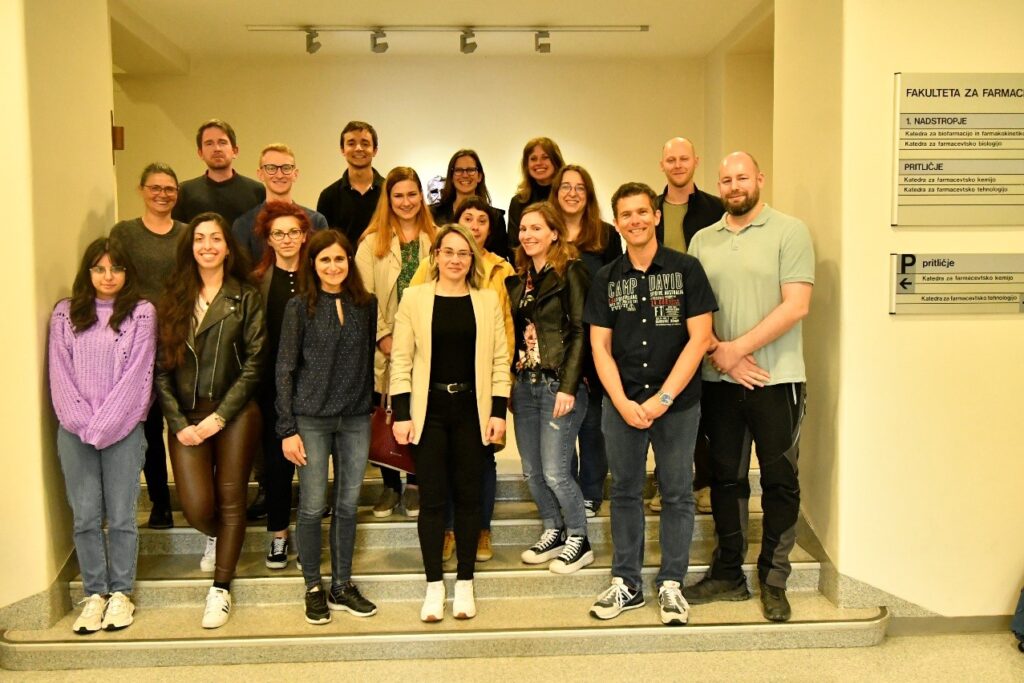
MitoCan multidisciplinary Consortium in anticancer drug discovery of novel mitochondrial ion channel inhibitors.

ARIS J1-3030: MTAvsAMR – new MultiTargeting Antibiotics against AntiMicrobial Resistance; 2021-2024; 300k EUR

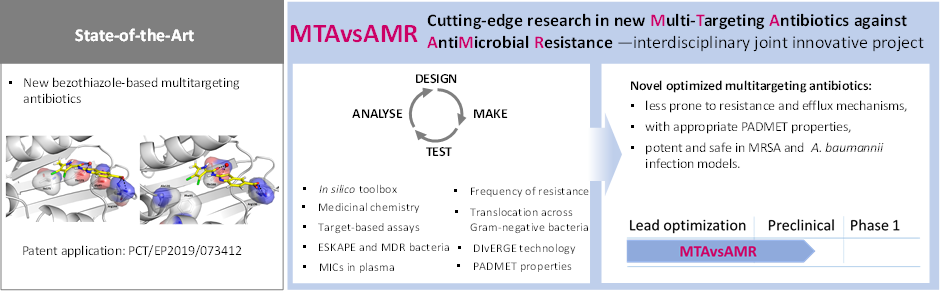
There is an urgent need for new therapies and new antibiotics to treat deadly infections caused by so-called ESKAPE pathogens – bacteria that are often resistant to available antibiotics. Not only infections caused by these pathogens are difficult to treat, but discovering new therapies to overcome Gram-negative resistance is particularly challenging. The World Health Organization classifies these pathogens as a critical threat because they are resistant to almost all available antibiotics. More than 95% of antibiotics in clinical trials are being developed by small companies and academia, not the big pharmaceutical companies that once dominated the field.

Ensuring that the supply of new antibiotics keeps pace with these evolving pathogens will require a robust pipeline of new antibiotics and innovative solutions. One promising strategy to address this rapid evolution of resistance is the design of antimicrobial compounds that equipotently inhibit two bacterial targets. The rationale for this approach is that the development of resistance to multitargeting antibiotics (MTA) would require the simultaneous occurrence of multiple specific mutations at both targets, which is extremely rare. Therefore, multitargeting antibiotics should be less susceptible to resistance compared to monotargeting antibiotics. However, the design of antibiotics that equipotently inhibit two bacterial targets and exhibit potent antibacterial activity, low frequency of resistance, adequate safety and physicochemical properties remains a challenge.

Presentation of the MTAvsAMR antibacterial drug discovery project. MDR: Multi Drug Resistant; MIC: Minimal Inhibitory Concentration; DIvERGE: Directed Evolution with Randomized Genomic Mutations; PADMET: Physicochemical properties, Absorption, Distribution, Metabolism, Elimination and Toxicity.

In the MTAvsAMR research project, we aim to develop a new structural class of MTA against two well-established molecular targets with innovative approaches to potent and safe antibiotics with limited resistance. Our MTAs are expected to simultaneously meet the following criteria: First, a balanced potency against the two essential bacterial targets DNA gyrase subunit B and topoisomerase IV subunit E is required. Second, they should establish strong intermolecular interactions at multiple, functionally important amino acid positions within the binding sites of their target proteins. Such interactions are thought to make spontaneous resistance unlikely, as mutations at these sites would impair the functionalities of the target proteins. In addition, we will target the antibacterial activity of the new molecules against ESKAPE pathogens to address an unmet medical need, with a target product profile of methicillin-resistant (MRSA), vancomycin-intermediate (VISA) Staphylococcus aureus and Acinetobacter baumannii clinical isolates.

ARIS J1-3031: Development of new inhibitors of bacterial topoisomerases to overcome antimicrobial resistance; 2021-2024; 300k EUR

The ATP binding site on DNA gyrase and topoisomerase IV is an attractive target for the development of new antibacterial agents. DNA gyrase and topoisomerase IV share 40% sequence identity, providing an exceptional opportunity for dual targeting. In recent years, several small molecule classes of ATP-competitive inhibitors have been discovered, but few have reached the market.

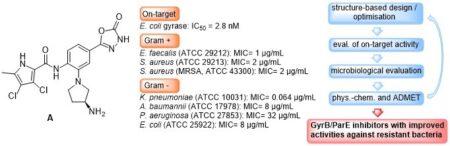
The overall aim of the project is to discover new ATP-competitive small-molecule inhibitors of DNA gyrase and topoisomerase IV with activity against resistant bacterial strains. We will start from our recently discovered N-phenylpyrrolamide GyrB/ParE inhibitors and optimise them using innovative structure-based design. We will design original new compounds with balanced dual-targeting activity towards GyrB and ParE, by interacting with multiple, functionally essential amino acids of both target proteins, with low probability of resistance development. We will determine the inhibitory activities of the prepared compounds on bacterial topoisomerases and on various off-targets. Potent and selective inhibitors will be subjected to detailed microbiological evaluation on selected Gram-positive and Gram-negative bacteria and mycobacteria, including multidrug resistant (MDR) strains. For the most promising hits with potent antibacterial activity, a comprehensive medicinal chemistry programme will be pursued to develop them towards lead compounds, which will involve determination and optimisation of compounds’ physicochemical (logP, logD, thermodynamic and kinetic solubility) and ADMET properties. The result of the project will be new lead compounds with potential to be developed into clinical candidates for the treatment of infections caused by resistant bacterial strains.

Representative N-phenylpyrrolamide GyrB/ParE inhibitor A and an overview of the work programme.

FINISHED GRANTS

University of Ljubljana Innovation Fund: Fight against bacterial resistance: new  antibacterial agents against resistant bacteria, PI: prof. dr. Lucija Peterlin Mašič  (2020-2021) (19k EUR)

University of Ljubljana Development Fund: Synthesis of the Week and Synthetic Masterchef of the Faculty of Pharmacy, PI: assist. prof. dr. Andrej Emanuel Cotman (2022–2023) (12k EUR)

ARRS project J1-1717: Development of novel Hsp90 inhibitors with anticancer activity, PI prof. dr. Tihomir Tomašič (2019-2023) (300k EUR)

ARIS project Z1-2635: Modular asymmetric total synthesis of bioactive multi-chiral natural products, PI: assist. prof. dr. Andrej Emanuel Cotman (2020–2022) (100k EUR)

ARRS project J1-9192: New antitumor agents against potassium ion channels hEAG1 and their validation in lymphomas, PI: prof. dr. Lucija Peterlin Mašič (2018-2021) (300k EUR)

FWO project: Discovery and mechanism of action of novel hEAG1 potassium channel lead molecules with anti-cancer activity, PI: prof. dr. Lucija Peterlin Mašič (2019-2022). Acronym: DISCO-a-GOGO (270k EUR)

IMI ENABLE: European Gram-negative Antibacterial Engine; hit-to-lead optimisation of new dual DNA gyrase B and topoisomerase IV inhibitors, PI: prof. dr. Danijel Kikelj, Chemistry leads: prof. dr. Lucija Peterlin Mašič, prof. dr. Tihomir Tomašič (2019-2020) (500k EUR)

CELSA project: Collaborative research project UL Ljubljana, KU Leuven: Discovery of New Leads of Voltage Gated Potassium Ion channels as Emerging Cancer Targets, PI: prof. dr. Lucija Peterlin Mašič (2017-2020), (30k EUR)

Collaborations

Prof. Dr. Jan Tytgat, Design and biological evaluation of potassium ion channels inhibitors, KU Leuven, Belgium; https://www.kuleuven.be/wieiswie/en/person/00018354

Prof. Dr. Luis Pardo, The role of voltage-gated potassium ion channels inhibits in cancer, the study of ion channels, the molecular mechanisms underlying their function, and of the impact this has on the behavior of cells, both in physiological and in pathological conditions; Max Planck Institute for Multidisciplinary Sciences, Germany; https://www.mpinat.mpg.de/pardo

Prof. Dr. Ildiko Szabo, Pharmacological targeting of mitochondrial ion channels to selectively induce apoptosis in cancer cells, University of Padova, Italy; https://www.biologia.unipd.it/en/department/people/teacher-details/?tx_wfqbe_pi1%5Baccount%5D=ildiko-szabo

Prof. Dr. Annarosa Arcangeli, biophysical aspects of intracellular signalling by controlling cell growth and differentiation of tumour cells, University of Florence, Italy; https://biography.omicsonline.org/italy/university-of-firenze/annarosa-arcangeli-373700

Dr. Csaba Pal, New antibacterial compounds with limited resistance, BRC institute, Szeged, Hungary (ERC starting grant, ERC consolidator grant, ERC proof of concept grant); http://group.szbk.u-szeged.hu/sysbiol/pal-csaba-lab-member.html#csaba-pal

Prof. Dr. Bojana Žegura, Development of high-throughput genotoxicity test systems for rapid detection of genotoxic agents; National Institute of Biology; Environmental and genetic toxicology; http://www.nib.si/eng/index.php/research#example-2-tab-3

Prof. Dr. Maja Čemažar, Development and evaluation of new, innovative approaches in cancer treatment, preclinical and clinical research; Institute of Oncology Ljubljana, Department of Experimental Oncology; Slovenia; https://www.onko-i.si/eng/sectors/research_and_education/department_of_experimental_oncology

Prof. Dr. Zoltán Varga, Biological evaluation of voltage-gated proton, sodium and potassium channel inhibitors, University of Debrecen, Faculty of Medicine, Department of Biophysics and Cell Biology, Debrecen, Hungary; https://biophys.med.unideb.hu/en/dr-zoltan-varga

Dr. Martin Distel, Evaluation of anticancer activity in zebrafish xenograft models, St. Anna Kinderkrebsforschung, Children’s Cancer Research Institute, Innovative Cancer Models and ZANDR-Platform, Vienna, Austria; https://ccri.at/innovative-cancer-models-zandr/

Prof. Dr. Geert Bultynck, Development of new allosteric inhibitors of IP3 receptor channels, KU Leuven, Belgium; https://www.kuleuven.be/wieiswie/en/person/00019147

Dr. Krzesimir Ciura, Evaluation of physico-chemical properties of compounds, Faculty of Pharmacy, Medical University of Gdansk, Poland; https://ppm.gumed.edu.pl/search/author?ps=20&t=simple&showRel=false&lang=en&qp=&cid=65999

Dr. Zrinka Rajić, Development of Hsp90 inhibitors, Faculty of Pharmacy and Biochemistry; University of Zagreb, Croatia; https://www.pharma.unizg.hr/en/about-us/staff/zrinka-rajic,431.html

Awards, Honors

2021 Commercialization activities for new antibacterial compounds: pre-acceleration at Latvian Commercialization reactor, second stage of EIT Jumpstarter programme (EIT Health)

2020 Award of the Innovation Fund of University of Ljubljana: Fight against bacterial resistance: new antibacterial agents against resistant bacteria; https://ppz.uni-lj.si/inovacijski-sklad-ul-2020/ https://ppz.uni-lj.si/en/

2019 2nd price for the best innovation of the University of Ljubljana: New antibacterial compounds for the treatment of resistant bacterial infections; https://www.uni-lj.si/v_ospredju/2019041816182994/

2019 prof. dr. Lucija Peterlin Mašič, Award of the Slovenian Pharmaceutical Society for excellent achievements in pharmaceutical sciences (Mlinarik award)

Patent applications/Patents

PETERLIN-MAŠIČ, Lucija, TOMAŠIČ, Tihomir, GUBIČ, Špela, PARDO A., Luis. Mitochondriotropic benzamide potassium channel Kv1.3 inhibitors: LU patent application LU501901, 22. April 2022. Luxembourg: LU Luxembourg Intellectual Property Office, 2022.

ZIDAR, Nace, TOMAŠIČ, Tihomir, ILAŠ, Janez, DURCIK, Martina, ZEGA, Anamarija, PETERLIN-MAŠIČ, Lucija, KIKELJ, Danijel. New N-phenylpyrrolamide inhibitors of DNA gyrase and topoisomerase IV with antibacterial activity: WO2022/129327 A1 23 06 2022. Munich: World Intellectual Property Organization, 2022. https://worldwide.espacenet.com/patent/search/family/079092947/publication/WO2022129327A1?q=pn%3DWO2022129327A1.

TOMAŠIČ, Tihomir, ZIDAR, Nace, DURCIK, Martina, ILAŠ, Janez, ZEGA, Anamarija, DURANTE CRUZ, Cristina, TAMMELA, Päivi, PÁL, Csaba, NYERGES JÓZSEF, Ákos, KIKELJ, Danijel, PETERLIN-MAŠIČ, Lucija. New class of DNA gyrase and/or topoisomerase IV inhibitors with activity against gram-positive and gram-negative bacteria : Patent application publication US 2021/0323957 A1, 2021-10-21. Alexandria: United States Patent and Trademark Office, 2021. https://worldwide.espacenet.com/patent/search/family/063998724/publication/US2021323957A1?q=pn%3.

TOMAŠIČ, Tihomir, ZIDAR, Nace, DURCIK, Martina, ILAŠ, Janez, ZEGA, Anamarija, DURANTE CRUZ, Cristina, TAMMELA, Päivi, PÁL, Csaba, NYERGES JÓZSEF, Ákos, KIKELJ, Danijel, PETERLIN-MAŠIČ, Lucija. New class of DNA gyrase and/or topoisomerase IV inhibitors with activity against gram-positive and gram-negative bacteria = Nouvelle classe d’inhibiteurs d’adn gyrase et/ou de topoisomérase iv ayant une activité contre des bactéries à gram positif et à gram négatif : publication number WO2020/048949 ; application number: PCT/EP2019/073412. Munich: European Patent Office, 2021. https://worldwide.espacenet.com/patent/search/family/063998724/publication/EP3847172A1?q=19769389.8.